
When words slip away and memories fade, what remains? For many people living with dementia, the answer is simple yet profound: the warmth of a hug. Loneliness, isolation, and emptiness are some of the common challenges for people living with dementia.
While no medication can erase these feelings, research and experience consistently shows that some of the most powerful remedies are love, warmth, and human connection. A simple hug brings all three together, offering comfort, reassurance, and a sense of belonging.
Touch is a fundamental human need and one of the most powerful forms of communication. For people living with dementia, hugs are more than affection, they are a language of connection. When verbal expression becomes difficult, a caring embrace can ease feelings of loneliness, reduce agitation and fear and restore a sense of security. Beyond emotional comfort, hugs encourage circulation, relieve muscle tension and contribute to pain management, providing comfort for those living with chronic health conditions. Gentle touch stimulates the release of oxytocin, often called the “bonding hormone,” while reducing levels of the stress hormone cortisol. Even simple acts of touch, such as a hand massage or applying hand lotion, may also increase serotonin, helping people feel calmer and less anxious. Together, these changes can promote relaxation, improve mood, lower blood pressure, and enhance overall well-being.
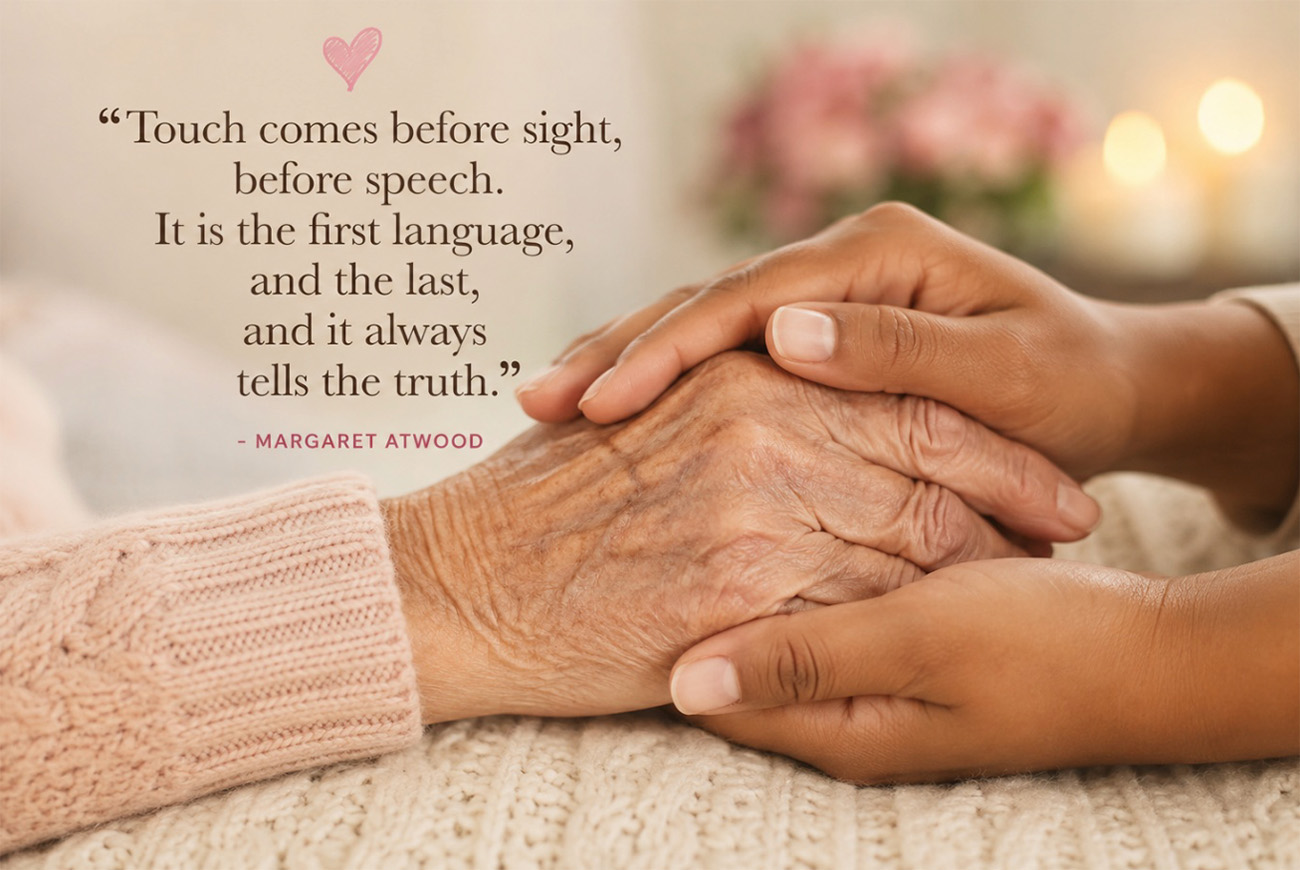
A hug may be one of life’s simplest gifts, but its impact can be profound. It has the power to lift the spirit, soothe the soul, and warm the hearts of both the person giving the hug and the person receiving it. In the silence of fading memory, a hug whispers the most important truth: you are safe, you are loved, you matter.
And perhaps best of all, hugs come with no prescription and no harmful side effects.
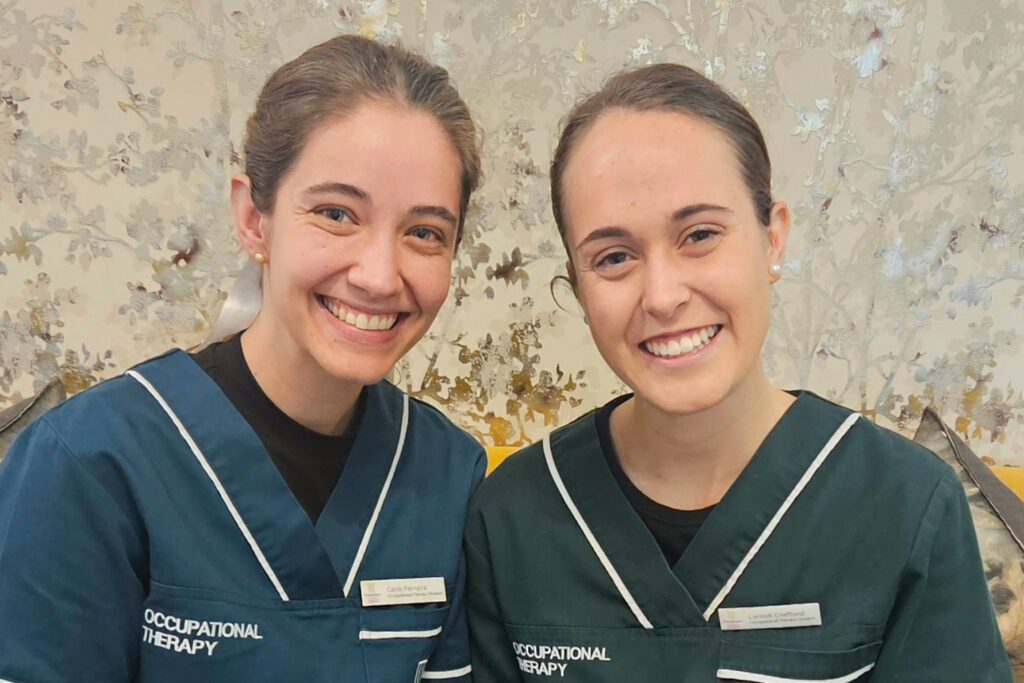
By OT Students,
Carla Ferreira & Larindi Crafford